
When Non-Surgical Treatments Are No Longer Enough
Non-surgical facial treatments can be helpful for early signs of aging, especially when concerns involve fine lines, mild volume loss, or skin texture. Over time, however, changes in skin laxity and deeper facial support may become more noticeable. When sagging along the cheeks, jawline, or neck becomes more advanced, non-surgical options may no longer provide the level of improvement a patient wants. A consultation focused on facial plastic surgery in Austin can help clarify when surgery may be the more appropriate next step.
What Non-Surgical Treatments Can Address
Non-surgical treatments often work well for subtle concerns. Injectable treatments, skin resurfacing, and other minimally invasive options may soften wrinkles, improve tone, or restore limited volume. These approaches can be useful for maintenance, especially when aging changes are mild.
However, non-surgical treatments have limits. They cannot remove significant excess skin or reposition deeper facial tissues in the same way surgery can. Learning about comprehensive facial plastic surgery options can help you understand where non-surgical care may fit and where surgical planning may become more effective.
Signs That Surgery May Be Worth Considering
Patients often begin thinking about facelift surgery when they notice changes that do not respond well to temporary treatments. These changes may involve sagging in the lower face, loose skin along the neck, or jowls that blur the jawline.
Common signs can include:
Deeper folds around the mouth
Loose skin below the chin or jawline
Loss of definition in the lower face
Results from non-surgical treatments that feel too subtle
A tired or aged appearance that does not match how you feel
A visit focused on facelift surgery as part of facial plastic surgery in Austin can help determine whether these concerns are related to skin laxity, volume changes, or deeper tissue descent.
Why More Treatment Is Not Always Better
When non-surgical treatments stop producing the desired effect, some patients try to compensate by adding more products or scheduling more frequent appointments. This may not always create a natural result. In some cases, overusing fillers or other treatments can make the face appear fuller without correcting the underlying sagging.
During advanced facial plastic surgery planning, your surgeon can explain whether continued non-surgical care makes sense or whether surgery would better address the cause of the concern. The goal is not to do more treatment, but to choose the right treatment for the problem.
How a Facelift Differs from Non-Surgical Care
A facelift is designed to reposition deeper facial tissues and improve sagging in the lower face and neck. Rather than simply adding volume or smoothing surface lines, surgery addresses structural changes that develop over time. This can create more durable improvement in areas where non-surgical treatments may fall short.
Recovery is an important consideration. Swelling, bruising, and activity restrictions are expected in the early healing phase. Reviewing facial rejuvenation procedures in Austin can help you understand how surgical and non-surgical options differ in terms of planning, downtime, and long term expectations.
Choosing the Right Time to Reassess
There is no single age when non-surgical treatments stop working. The right timing depends on anatomy, skin quality, goals, and how much change you want to achieve. Some patients continue with non-surgical care for years, while others benefit from surgery once laxity becomes more pronounced.
A consultation centered on facial plastic surgery services in Austin can help you compare options and make an informed decision. With careful evaluation, many patients choose a plan that supports natural looking improvement while avoiding unnecessary or ineffective treatments.
Disclaimer: This article is for general education only. For guidance, consult a board-certified facial plastic surgeon.

Vision Changes Caused by Excess Upper Eyelid Skin
Upper eyelid changes are often associated with appearance, but they can also affect daily comfort and vision. As the skin above the eyes becomes looser over time, it may fold over the natural eyelid crease or rest near the lashes. In some cases, this excess skin can narrow the upper field of vision and make routine activities more difficult. A consultation focused on facial plastic surgery in Austin can help determine whether eyelid changes are cosmetic, functional, or both.
Why Upper Eyelid Skin Changes Over Time
The skin around the eyes is thin and delicate, which makes it more likely to show age-related changes early. Over time, collagen loss, skin laxity, and shifting tissues can create heaviness in the upper lids. Some people notice that their eyes look tired, while others feel a physical weight above the eyes.
These changes may happen gradually, making them easy to adapt to without realizing how much they affect vision. Learning about comprehensive facial plastic surgery options can help clarify whether excess eyelid skin is part of normal aging or something that may benefit from surgical evaluation.
Signs That Eyelid Skin May Be Affecting Vision
Not all eyelid heaviness causes functional problems. However, certain symptoms may suggest that excess skin is interfering with daily activities. You may notice that you raise your eyebrows frequently, tilt your head back to see better, or feel eye fatigue after reading or working at a computer.
Common signs can include:
Difficulty seeing in the upper or side field of vision
A heavy feeling above the eyes
Skin resting on or near the eyelashes
Frequent forehead tension from lifting the brows
Trouble applying makeup because of folded skin
A visit centered on upper facial plastic surgery evaluation can help identify whether these symptoms are related to excess skin, brow position, or another concern.
Cosmetic and Functional Eyelid Concerns
Upper eyelid surgery, also known as blepharoplasty, can address both appearance and function. For cosmetic concerns, the goal may be to create a more open, rested appearance. For functional concerns, the goal may include removing skin that blocks vision or causes irritation.
Because the eye area is highly expressive, surgeons plan carefully to avoid an overcorrected look. Reviewing facial rejuvenation procedures in Austin can help you understand how eyelid surgery fits into a broader facial assessment while still preserving natural expression.
What Happens During Evaluation
A thorough eyelid evaluation often includes a discussion of symptoms, photographs, and an exam of the eyelids and brows. Your surgeon may also ask whether you experience dry eyes, irritation, or changes in vision. In some cases, visual field testing may be recommended to document how much the eyelids affect sight.
During advanced facial plastic surgery planning, your surgeon can explain whether upper eyelid surgery alone may be appropriate or whether brow position also needs to be considered.
Planning the Right Next Step
Excess upper eyelid skin does not always require surgery. Mild changes may be monitored, especially if they are not affecting comfort or vision. However, when heaviness interferes with daily life, a surgical consultation can provide helpful answers.
A consultation focused on facial plastic surgery services in Austin can help you understand your options, expected recovery, and realistic outcomes. With careful evaluation, many patients improve both eyelid comfort and visual openness while maintaining a natural appearance.
Disclaimer: This article is for general education only. For guidance, consult a board-certified facial plastic surgeon.
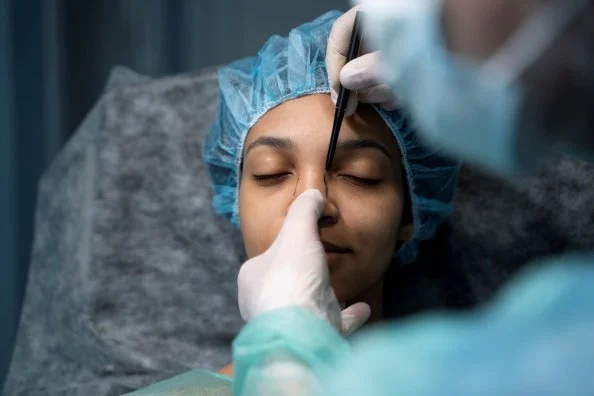
How Nose Surgery Can Improve Facial Harmony Without Changing Identity
Many people who consider rhinoplasty are not looking for a dramatic change. They may want the nose to feel more balanced with the rest of the face while still looking like themselves. This is one reason careful planning matters. A well-designed rhinoplasty does not focus on creating a standard nose. It focuses on refining shape, proportion, and structure in a way that supports your natural features. A consultation focused on facial plastic surgery in Austin can help determine what changes may be appropriate for your goals.
Why Facial Harmony Matters
The nose is one of the most central facial features, so even small adjustments can influence overall appearance. A bridge that feels too prominent, a drooping tip, or visible asymmetry may draw attention away from the eyes, cheeks, or smile. When the nose is more proportionate, the face may appear more balanced as a whole.
Surgeons evaluate the face from multiple angles before recommending any changes. Front view, profile view, chin projection, skin thickness, and facial symmetry all matter. Learning about comprehensive facial plastic surgery options can help you understand why planning looks at the entire face rather than one feature alone.
Refinement Instead of Reinvention
A natural rhinoplasty result usually comes from subtle refinement. This may involve smoothing a bump, adjusting the nasal tip, narrowing certain areas, or improving symmetry. The goal is not to erase personal features or make every nose look the same.
During a consultation, patients are often encouraged to explain what they want to improve and what they want to preserve. This conversation helps the surgeon understand the desired level of change. Exploring rhinoplasty procedures in Austin can provide helpful context about how nose surgery is customized to individual anatomy.
How Anatomy Shapes the Surgical Plan
Every nose has unique structural characteristics. Skin thickness, cartilage strength, prior injuries, and breathing function can all influence what is possible. These details affect how much definition can be achieved and how stable the result may be over time.
Because of this, two patients with similar goals may need very different surgical plans. An appointment centered on advanced facial plastic surgery planning allows your surgeon to explain what changes are realistic based on your structure and healing factors.
Balancing Appearance and Function
Rhinoplasty planning should also consider breathing. Even when a patient’s main concern is appearance, internal structures may need to be evaluated. Septal alignment, nasal valve support, and airway function can affect comfort and long term results.
A procedure that improves shape while weakening support may create future problems. Reviewing nose surgery options in Austin can help you better understand how surgeons balance cosmetic goals with structural stability and function.
Setting Clear Expectations
Before surgery, it is important to have realistic expectations. Rhinoplasty can improve balance and proportion, but it cannot create perfection or duplicate someone else’s features. Healing also takes time. Swelling may improve gradually, especially around the nasal tip.
A consultation focused on facial plastic surgery services in Austin can help you ask clear questions, review your priorities, and understand the recovery process. With thoughtful planning, many patients achieve a refined result that feels natural, balanced, and consistent with their identity.
Disclaimer: This article is for general education only. For guidance, consult a board-certified facial plastic surgeon.

What a Natural Looking Facelift Really Means
Many people considering a facelift share the same concern. They want to look refreshed, not different. The goal of modern facelift techniques is not to create a tight or artificial appearance, but to restore balance in a way that still looks like you. Understanding what defines a natural looking result can help you approach the process with realistic expectations. A consultation focused on facial plastic surgery in Austin can help determine what level of improvement aligns with your features and goals.
Moving Beyond the “Pulled” Look
Outdated perceptions of facelift surgery often involve overly tight skin and visible changes in expression. Today, surgeons focus on repositioning deeper structures rather than simply tightening the surface. This approach allows for smoother contours while preserving natural movement.
By addressing underlying tissues, surgeons can lift and support areas such as the cheeks and jawline without distorting facial features. Learning about comprehensive facial plastic surgery options can help you understand how modern techniques aim for subtle, balanced improvement rather than dramatic change.
Restoring Rather Than Changing
A natural result is typically defined by restoration. The goal is to bring facial features closer to how they appeared earlier, rather than creating a new or unfamiliar look. This may include softening deep folds, improving jawline definition, and reducing sagging in the lower face and neck.
Each plan is tailored to the individual. Factors such as skin quality, bone structure, and degree of aging all influence the approach. Exploring facelift surgery as part of facial plastic surgery in Austin can provide insight into how surgeons customize techniques for long term stability and natural results.
The Importance of Facial Balance
Facial harmony plays a key role in achieving a natural appearance. Changes to one area must complement surrounding features. For example, lifting the lower face without considering the midface or neck can create imbalance.
During an appointment focused on advanced facial plastic surgery planning, your surgeon evaluates how each part of the face contributes to overall appearance. This comprehensive approach helps ensure that results look consistent from all angles.
Subtle Results That Improve Over Time
A natural looking facelift does not produce instant final results. Swelling and healing take time, and subtle refinements continue over several months. This gradual progression often helps results blend more seamlessly with your appearance.
Patients are typically able to return to normal routines in stages, with full results becoming more apparent as tissues settle. Reviewing facial rejuvenation procedures in Austin can help you understand how recovery timelines contribute to a natural outcome.
Choosing the Right Expectations
Natural results depend not only on surgical technique, but also on clear communication. Patients who discuss their goals openly and understand the limits of surgery are more likely to feel satisfied with the outcome.
A consultation centered on facial plastic surgery services in Austin allows you to ask questions about technique, recovery, and expected changes. By focusing on balance, proportion, and preservation of your unique features, many patients achieve a refreshed appearance that looks consistent with who they are.
Disclaimer: This article is for general education only. For guidance, consult a board-certified facial plastic surgeon.
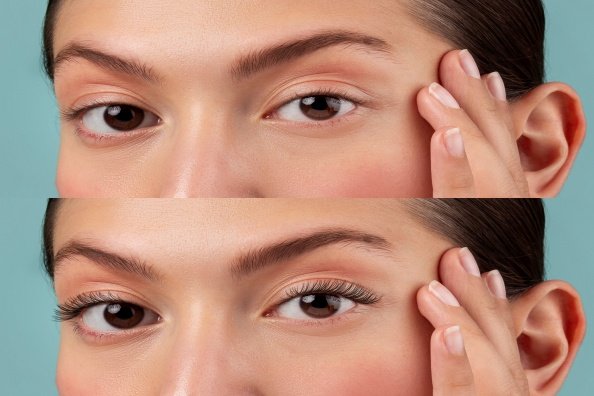
Makeup Challenges with Hooded Lids and Surgical Options
Hooded eyelids can make everyday routines more difficult, especially when applying makeup. Some people notice that eyeshadow becomes less visible, eyeliner transfers to the upper lid, or the eyes appear smaller than they feel. While these changes are often part of natural aging, they can also be influenced by excess skin in the upper eyelids. Understanding what causes hooded lids and what options are available can help you decide how to address these concerns. A consultation focused on facial plastic surgery in Austin can provide clarity based on your anatomy and goals.
Why Hooded Lids Affect Makeup Application
As the upper eyelid skin gradually loses elasticity, it can fold over the natural crease. This reduces the visible lid space and changes how makeup sits on the skin. Products may smudge or transfer more easily, and achieving a defined look can take more time and precision.
These changes may develop slowly and symmetrically, making them easy to overlook at first. Learning about comprehensive facial plastic surgery options can help you determine whether your concerns are related to typical aging or to more significant excess skin that may benefit from treatment.
Common Signs Beyond Makeup Concerns
While makeup challenges are often the first noticeable issue, hooded eyelids can also create other effects. These may include a tired or heavy appearance, difficulty keeping the eyes fully open, or the need to raise the eyebrows to improve visibility.
Additional signs can include:
Eyeliner or mascara transferring to the upper lid
Reduced visibility of the eyelid crease
A shadowed appearance over the eyes
Mild discomfort from skin resting on the lashes
A consultation focused on upper facial plastic surgery evaluation can help determine whether these concerns are primarily cosmetic or if they also have a functional component.
When Surgical Options May Be Considered
Upper eyelid surgery, also known as blepharoplasty, is designed to remove excess skin and restore a more open appearance. For patients whose concerns go beyond makeup challenges, surgery may provide a longer lasting solution compared with temporary adjustments.
Because the eye area is central to facial expression, surgeons typically plan conservative changes that maintain a natural look. Reviewing facial rejuvenation procedures in Austin can help you understand how eyelid surgery fits into an overall facial approach.
Evaluating the Full Facial Context
Not all hooded eyelids are caused by excess skin alone. In some cases, brow position or underlying muscle changes contribute to the appearance. Addressing the correct cause is important for achieving balanced results.
During an appointment centered on advanced facial plastic surgery planning, your surgeon will evaluate the relationship between the eyelids, brows, and surrounding features. This ensures that any recommended treatment supports overall harmony rather than focusing on one area in isolation.
Exploring the Right Approach for You
Many people manage hooded lids with makeup techniques or minor adjustments in their routine. However, when these changes no longer provide the desired effect, it may be helpful to explore medical options.
A consultation focused on facial plastic surgery services in Austin allows you to review your concerns, discuss expectations, and learn what results are realistic. With careful evaluation and individualized planning, many patients achieve a more defined and refreshed eye area while maintaining their natural expression.
Disclaimer: This article is for general education only. For guidance, consult a board-certified facial plastic surgeon.

Combining Rhinoplasty with Other Facial Procedures: Is It Right for You?
Rhinoplasty can create meaningful changes to the nose, but some patients wonder whether combining it with other facial procedures may lead to a more balanced result. Because the nose sits at the center of the face, adjustments to this feature can influence how surrounding areas appear. In certain cases, addressing multiple concerns during one surgical plan may support overall harmony. A consultation focused on facial plastic surgery in Austin can help determine whether a combined approach aligns with your goals and health considerations.
Why Patients Consider Combining Procedures
Some individuals seek rhinoplasty to refine the bridge or tip, while also noticing changes in other areas such as the chin or eyelids. When multiple features contribute to imbalance, treating only one area may not fully achieve the desired outcome. Combining procedures allows surgeons to evaluate how different features interact and plan changes that complement each other.
For example, enhancing chin projection alongside rhinoplasty may improve profile balance. Addressing eyelid heaviness at the same time may create a more refreshed overall appearance. Learning about comprehensive facial plastic surgery options can help you understand how these combinations are planned in a coordinated way.
Safety and Surgical Planning
Combining procedures is not simply about convenience. Patient safety is always the primary consideration. Surgeons evaluate overall health, medical history, and the complexity of each procedure before recommending a combined approach. In some cases, staging procedures separately may be safer or lead to better outcomes.
During an appointment focused on advanced facial plastic surgery planning, your surgeon will explain whether combining procedures is appropriate and how it may affect operative time, anesthesia, and recovery.
Recovery Considerations
One potential benefit of combining procedures is a single recovery period rather than multiple separate healing phases. However, recovery may feel more involved depending on the procedures performed. Swelling, bruising, and activity restrictions may vary across treated areas.
Planning ahead is important. Arranging time away from work, preparing your home environment, and understanding aftercare instructions can help support a smoother recovery. Reviewing rhinoplasty procedures in Austin can provide insight into how recovery timelines may overlap when procedures are combined.
Setting Realistic Expectations
While combining procedures can enhance overall balance, it does not guarantee a faster or easier outcome. Healing still occurs gradually, and subtle swelling can take time to resolve. Surgeons aim for results that look natural and consistent with your features rather than dramatic changes.
Clear communication about your priorities is essential. Bringing reference photos and discussing what you want to preserve as well as what you want to change can help guide the surgical plan. Exploring nose surgery options in Austin can also help you understand how rhinoplasty fits into a broader facial strategy.
Making the Right Decision for You
Not every patient benefits from combining procedures. Some may achieve excellent results by focusing on one area at a time. Others may find that a combined approach provides a more cohesive outcome. The decision depends on anatomy, goals, and overall health.
A consultation centered on facial plastic surgery services in Austin allows you to review your options in detail and develop a plan that prioritizes both safety and long term satisfaction. With careful evaluation and thoughtful planning, many patients achieve balanced, natural looking results that reflect their individual goals.
Disclaimer: This article is for general education only. For guidance, consult a board-certified facial plastic surgeon.

How Lifestyle Factors Affect Facial Aging and Surgical Timing
Facial aging is influenced by more than genetics alone. Daily habits, environmental exposure, and overall health can significantly affect how skin and underlying tissues change over time. While aging is inevitable, understanding these influences can help you make informed decisions about prevention, maintenance, and the timing of surgical options such as a facelift. A consultation focused on facial plastic surgery in Austin can provide personalized guidance based on your anatomy and lifestyle history.
Sun Exposure and Skin Quality
Ultraviolet radiation is one of the most significant contributors to premature aging. Repeated sun exposure breaks down collagen and elastin, leading to wrinkles, uneven pigmentation, and loss of firmness. Over time, this damage can accelerate sagging in the cheeks, jawline, and neck.
Consistent sun protection may slow these changes, but existing damage can still influence surgical planning. Learning about comprehensive facial plastic surgery options can help you understand how skin quality affects both procedure choice and expected outcomes.
Smoking and Healing Capacity
Smoking has well documented effects on skin health and circulation. Nicotine constricts blood vessels, reducing oxygen delivery to tissues and impairing healing. This can lead to delayed recovery, increased risk of complications, and less durable results after surgery.
For patients considering facial rejuvenation, surgeons often recommend stopping smoking well in advance of any procedure. A visit centered on facelift surgery as part of facial plastic surgery in Austin allows you to discuss how smoking history may influence candidacy and recovery planning.
Weight Changes and Facial Structure
Significant fluctuations in weight can alter facial volume and skin tension. Rapid weight loss may lead to increased laxity, while weight gain can stretch tissues and change contours. Stable weight is generally preferred before undergoing a facelift, as it helps maintain long term results.
Reviewing facial rejuvenation procedures in Austin can clarify how surgeons address volume loss, sagging, and structural changes related to weight fluctuations.
Stress, Sleep, and Overall Health
Chronic stress and poor sleep quality can affect skin repair processes and contribute to a fatigued appearance. Inflammation, hormonal changes, and fluid retention may all play roles in how the face ages. Maintaining good overall health supports both natural aging and recovery from surgical procedures.
During an appointment focused on advanced facial plastic surgery planning, your surgeon may discuss lifestyle factors that could influence healing and long term satisfaction with results.
Choosing the Right Time for Surgery
There is no universal age at which a facelift becomes appropriate. Instead, timing depends on the degree of skin laxity, structural changes, and personal goals. Some individuals seek surgery when early signs of aging become noticeable, while others wait until changes are more pronounced.
Planning around work schedules, caregiving responsibilities, and social commitments is also important. A consultation centered on facial plastic surgery services in Austin can help you determine when surgery fits best into your life while allowing adequate time for recovery.
Taking a Long Term Perspective
Facial aging continues even after surgery, although procedures such as a facelift can restore more youthful contours for many years. Combining surgical treatment with healthy lifestyle habits may help preserve results and support ongoing skin health.
If you are considering facial rejuvenation, understanding how daily habits influence aging can help you approach the process with realistic expectations. With careful evaluation and individualized planning, many patients achieve natural looking improvement that aligns with their long term goals.
Disclaimer: This article is for general education only. For guidance, consult a board-certified facial plastic surgeon.
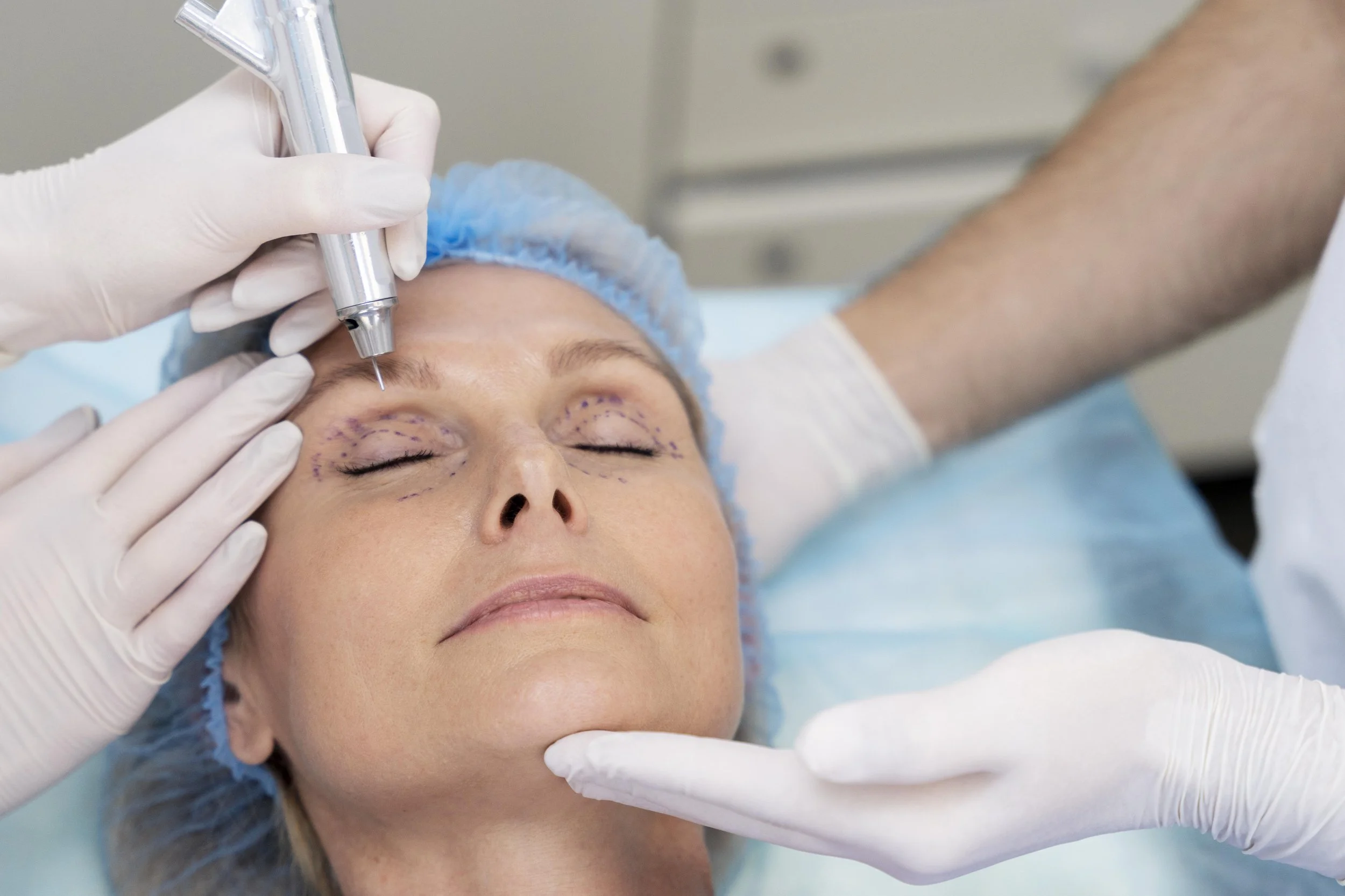
Why Upper Eyelid Surgery Is Often One of the First Rejuvenation Procedures
Changes around the eyes are frequently among the earliest visible signs of facial aging. The upper eyelids, in particular, can develop excess skin, heaviness, or a hooded appearance that makes the face look tired even when you feel well rested. Because these changes can occur before deeper facial aging becomes noticeable, upper eyelid surgery is often one of the first procedures patients consider. A consultation focused on facial plastic surgery in Austin can help determine whether eyelid concerns are isolated or part of broader facial aging.
How Aging Affects the Upper Eyelids
Over time, skin loses elasticity and underlying tissues shift. The thin skin of the upper eyelids is especially vulnerable to these changes. Gradual stretching can cause folds that rest on the lashes or obscure the natural eyelid crease. Fat redistribution and muscle weakening may further contribute to a heavy or puffy appearance.
These changes are not always purely cosmetic. In some cases, excess skin can interfere with peripheral vision or cause discomfort during daily activities. Learning about comprehensive facial plastic surgery options can clarify whether your concerns are likely to respond to eyelid surgery alone or whether additional procedures may be recommended for balance.
Cosmetic and Functional Benefits
Upper eyelid surgery, also known as blepharoplasty, can address both aesthetic and functional concerns. Cosmetic improvements may include a more open, alert appearance and smoother eyelid contour. Functional benefits may involve removing skin that obstructs vision or causes irritation.
Because the eyes play a central role in facial expression, surgeons typically plan conservative changes that maintain a natural look. Reviewing upper facial plastic surgery evaluation options can help you understand how surgeons preserve individual features while reducing heaviness.
Why It Is Often Chosen Early
Compared with procedures that address deeper facial structures, upper eyelid surgery is relatively focused and can produce noticeable improvement with a targeted approach. Many patients seek treatment when eye makeup becomes difficult to apply or when photographs consistently show a fatigued appearance.
The recovery process is often manageable for individuals with busy schedules, although downtime still varies. During a visit centered on facial rejuvenation procedures in Austin, your surgeon can explain expected healing milestones and when most patients feel comfortable returning to normal activities.
Evaluating Overall Facial Balance
Even when the primary concern involves the eyelids, surgeons assess surrounding features such as brow position and skin quality. Sometimes heaviness in the upper eyelids is influenced by brow descent rather than excess eyelid skin alone. Accurate diagnosis ensures that the chosen treatment addresses the underlying cause.
An appointment focused on advanced facial plastic surgery planning allows for a comprehensive evaluation of facial proportions and long term goals. This approach helps prevent under treatment or unnecessary procedures.
Deciding Whether Surgery Is Appropriate
Not everyone with eyelid heaviness requires surgery. Mild concerns may be managed with non surgical options or simple adjustments in lifestyle and lighting. However, when excess skin significantly affects appearance or function, surgical correction may offer the most durable improvement.
If you are considering options to refresh the eye area, a consultation centered on facial plastic surgery services in Austin can provide personalized guidance based on your anatomy and priorities. With careful planning and realistic expectations, many patients achieve a brighter, more rested appearance while maintaining their natural expression.
Disclaimer: This article is for general education only. For guidance, consult a board-certified facial plastic surgeon.

Mini Facelift vs Traditional Facelift: What Patients Should Know
Facial aging affects each person differently. Some people notice mild sagging along the jawline, while others develop deeper folds, skin laxity, or changes in neck contour. When non surgical treatments no longer provide the desired improvement, facelift surgery may become a consideration. Understanding the difference between a mini facelift and a traditional facelift can help you decide which approach aligns with your goals, anatomy, and timeline. A consultation focused on facial plastic surgery in Austin is the best way to determine what level of correction is appropriate.
What a Mini Facelift Addresses
A mini facelift targets early signs of aging, particularly mild sagging in the lower face and jawline. Because the procedure involves smaller incisions and less extensive tissue repositioning, recovery is often shorter compared with more comprehensive techniques. Patients who still have good skin elasticity but want subtle refinement are often candidates.
This approach focuses on tightening underlying structures to restore definition without dramatically altering facial appearance. Learning about comprehensive facial plastic surgery options can help clarify whether limited correction will achieve your desired outcome or whether a more extensive procedure may be needed for lasting results.
What a Traditional Facelift Treats
A traditional facelift addresses more advanced aging changes, including deeper folds, significant skin laxity, and loss of contour in the midface and neck. The procedure typically involves repositioning deeper tissues as well as removing excess skin. This allows surgeons to create smoother contours and more durable rejuvenation.
Because the changes are more comprehensive, recovery may involve a longer healing period. Swelling and bruising gradually improve over several weeks, with continued refinement over the following months. Exploring facelift surgery as part of facial plastic surgery in Austin can provide a clearer picture of what to expect during recovery and long term results.
How Surgeons Determine the Right Approach
The choice between a mini and traditional facelift depends on several factors. Skin quality, bone structure, degree of laxity, and personal goals all play important roles. Age alone does not determine candidacy. Some younger patients may benefit from a more extensive procedure, while some older patients with milder changes may be well suited to a limited approach.
During an appointment focused on advanced facial plastic surgery planning, surgeons evaluate facial proportions and discuss how each technique would affect overall balance. The goal is to achieve natural looking improvement rather than an over tightened appearance.
Timing and Long Term Considerations
Many patients wonder whether starting with a mini facelift will delay the need for a traditional facelift later. While a mini procedure can provide meaningful improvement, aging continues over time. Future treatments may still be considered as facial structures change.
Planning around work schedules, travel, and social commitments is also important. A consultation that reviews facial rejuvenation procedures in Austin can help you understand expected downtime, activity restrictions, and how results typically evolve.
Making an Informed Decision
Choosing facelift surgery is a personal decision that should be based on careful evaluation rather than assumptions about what you need. Both mini and traditional techniques can produce natural results when performed by an experienced surgeon who considers your unique anatomy.
If you are exploring options to address facial aging, a visit centered on facial plastic surgery services in Austin can clarify whether a mini facelift, traditional facelift, or another treatment best supports your goals. With thoughtful planning and realistic expectations, many patients achieve refreshed contours while maintaining their natural expression.
Disclaimer: This article is for general education only. For guidance, consult a board-certified facial plastic surgeon.
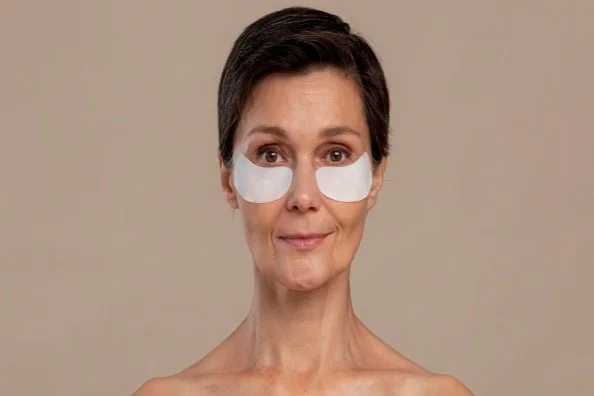
Drooping Eyelids vs Natural Aging: How to Tell What You’re Seeing
Changes around the eyes are often among the first signs of facial aging. Many people notice heaviness in the upper eyelids, a tired appearance, or difficulty applying makeup smoothly. While some of these changes are part of normal aging, others may relate to excess skin that could benefit from medical evaluation. Understanding the difference can help you decide whether to monitor the changes or explore treatment through facial plastic surgery in Austin.
Why the Upper Eyelids Change Over Time
As skin loses elasticity with age, it can gradually stretch and fold over the natural crease of the eyelid. Fat distribution also shifts, and the muscles that support the eyelids may weaken. Together, these changes can create a hooded or sagging appearance.
For some individuals, the changes are mild and primarily cosmetic. For others, excess skin may rest on the lashes or even interfere with peripheral vision. Learning about comprehensive facial plastic surgery options can help clarify whether your concerns fall within the typical aging process or suggest a structural issue that could be addressed surgically.
Signs That May Suggest True Eyelid Drooping
Natural aging often affects both sides gradually and symmetrically. However, certain features may indicate more significant eyelid laxity or ptosis. These can include persistent heaviness, difficulty keeping the eyes fully open, or the need to raise the eyebrows to see clearly.
Other clues may include:
Makeup transferring to the upper lid because of excess skin
A shadowed or tired look even when well rested
Reduced upper visual field, especially when reading
Discomfort from skin rubbing against the lashes
A consultation focused on upper facial plastic surgery evaluation can determine whether these symptoms are due to skin redundancy, muscle weakness, or another factor.
Cosmetic vs Functional Considerations
Upper eyelid surgery can be performed for cosmetic reasons, functional reasons, or both. Cosmetic procedures aim to create a more open and refreshed appearance. Functional procedures may remove excess skin that obstructs vision or causes irritation.
Surgeons carefully evaluate eye health, brow position, and facial proportions before recommending treatment. Because the eye area is delicate, planning emphasizes conservative changes that preserve natural expression. Reviewing facial rejuvenation procedures in Austin can help you understand how eyelid surgery fits into broader facial harmony.
When to Seek Professional Guidance
If eyelid heaviness is affecting daily activities or causing discomfort, it may be worth seeking an evaluation. Early consultation does not obligate you to surgery. Instead, it provides information about options, timing, and expected outcomes.
During a visit centered on facial plastic surgery services in Austin, your surgeon can assess whether your concerns are consistent with typical aging or represent a condition that may benefit from treatment. They can also explain recovery expectations and how results typically evolve over time.
Understanding Your Options
Not every case of drooping eyelids requires surgery. Lifestyle adjustments, improved lighting, or non surgical treatments may provide sufficient relief for mild concerns. However, when excess skin or muscle laxity is significant, surgical correction may offer the most durable improvement.
Recognizing the difference between normal aging and functional eyelid issues allows you to make informed decisions about your care. With careful evaluation and individualized planning, many patients achieve a more comfortable and refreshed appearance while maintaining natural facial expression.
Disclaimer: This article is for general education only. For guidance, consult a board-certified facial plastic surgeon.

How Facial Proportions Influence Rhinoplasty Planning
Rhinoplasty can reshape the nose, but thoughtful planning looks at the entire face rather than one feature in isolation. Because the nose sits at the center of the face, even subtle changes can affect how the eyes, cheeks, and jawline appear. If you are considering surgery, understanding how facial proportions guide decision making can help you set realistic expectations and prepare for a productive consultation with a specialist in facial plastic surgery in Austin.
Why Surgeons Evaluate the Whole Face
A balanced result depends on how the nose relates to surrounding structures. Surgeons typically assess facial symmetry, profile angles, skin thickness, and the relationship between the nose and chin. Photos from multiple views are often used to study proportions and discuss goals. This process helps ensure that the outcome looks natural in everyday situations rather than appearing overcorrected.
Some patients focus on a single concern, such as a bump on the bridge or a drooping tip. While those features can be addressed, the surgical plan usually considers how adjustments will influence overall harmony. A consultation for comprehensive facial plastic surgery options can clarify what changes will improve balance without altering your identity.
Structural Factors That Affect Results
Not every nose responds the same way to surgery. Internal anatomy, cartilage strength, prior injuries, and skin thickness all influence what is achievable. For example, thicker skin may limit how sharply the tip can be refined, while weaker cartilage may require structural support techniques. Understanding these factors early helps patients avoid unrealistic expectations.
Breathing function is another critical consideration. When internal structures contribute to obstruction, surgeons may incorporate functional corrections alongside cosmetic changes. Exploring rhinoplasty procedures in Austin allows you to learn how aesthetic and functional goals can be addressed together when appropriate.
The Role of Personal Goals and Lifestyle
Your reasons for seeking rhinoplasty matter as much as your anatomy. Some individuals want subtle refinement that maintains a familiar appearance. Others seek more noticeable changes to correct long-standing concerns. Clear communication about your priorities helps guide surgical planning and recovery expectations.
Timing also plays a role. Swelling can take time to resolve, particularly in the nasal tip. If you have important events scheduled, planning extra buffer time is often recommended. During a visit focused on advanced facial plastic surgery planning, your surgeon can outline a realistic timeline for healing and social downtime.
Setting Realistic Expectations
Rhinoplasty can improve facial balance, but it cannot create perfection. Surgeons aim for results that complement your natural features and remain stable over time. A thorough consultation typically includes discussion of potential risks, recovery milestones, and the limits imposed by your anatomy.
Patients often benefit from asking detailed questions about both appearance and function. Reviewing nose surgery options in Austin can provide a clearer understanding of techniques, recovery, and long term outcomes before making a decision.
Moving Forward with Confidence
Choosing rhinoplasty is a personal decision that involves careful evaluation, planning, and trust in your surgical team. By focusing on facial proportions rather than isolated features, surgeons can design results that look natural and balanced. If you are exploring facial rejuvenation or structural improvements, a consultation centered on facial plastic surgery services in Austin can help determine whether rhinoplasty aligns with your goals and health considerations.
Disclaimer: This article is for general education only. For guidance, consult a board-certified facial plastic surgeon.

Addressing Facial Changes After Major Weight Loss With Facial Plastic Surgery
Major weight loss is a win for health, but it can change facial volume and skin support in ways that feel unexpected. If you notice new hollowing, loose skin, or sharper lines, facial plastic surgery can be used to restore balance without chasing quick fixes.
What Changes After Weight Loss
Weight loss often reduces facial fat and shifts the way soft tissue rests on bone. Common concerns include under-eye hollowing, a flatter midface, deeper folds around the mouth, jowling, and neck laxity. Skin quality also matters, because thinner or sun-damaged skin may not retract well after volume changes. Your reputable facial surgeon will identify corrective procedures during your initial consultation.
Match the Concern to the Right Category of Treatment
Some issues are mainly about structure, while others are about skin and texture. Structural changes are often better addressed with lifting and repositioning, while volume changes may call for fat transfer or other volumizing approaches. Surface concerns, like texture and fine lines, may be improved with targeted non-surgical treatments after healing. For surgical options that address laxity in the lower face and neck, you can review the facelift and necklift procedure and the broader facial plastic surgery services.
Timing Matters More Than Many Patients Expect
If your weight is still changing, it can be hard to judge what should be corrected now versus later. Stabilizing weight for a period helps you and your surgeon plan a result that is more predictable. It also reduces the risk of overcorrecting volume or tightening tissues before your body has settled into a new baseline.
External medical groups have noted that rapid weight loss can lead to facial hollowing that is often best addressed with a combined approach such as lifting and volume restoration. Check out the American Society of Plastic Surgeons discussion on the options available after sudden and dramatic weightloss.
Consider a Staged Plan Instead of Stacking Everything at Once
A staged plan reduces guesswork. Many patients do best by addressing the most structural concern first, then evaluating what remains after swelling and tissue settling. This approach can also make recovery and budgeting more manageable. This resource is helpful when you are thinking about long-term planning.
A Pre-Consult Planning Checklist
Write down the top two changes that bother you most in photos and in motion.
Note whether your weight has been stable and for how long.
Bring a list of medications, supplements, and any nicotine use to discuss safety.
Ask which goals are best addressed with lifting, which need volume, and which are skin quality.
Confirm realistic downtime for swelling, bruising, and returning to normal exercise.
After major weight loss, the face can change in predictable patterns, but the right solution depends on whether the main issue is laxity, volume loss, skin quality, or a mix. A category-based plan and a stable baseline make it easier to choose facial plastic surgery options that look natural and hold up over time.
Disclaimer: This content is for informational purposes only. It is not intended as medical advice.
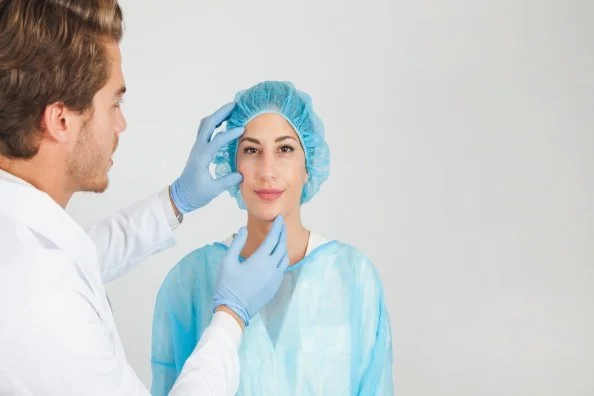
Facial Plastic Surgery and Non-Surgical Treatments: A Long-Term Plan
A sustainable plan starts with priorities, not impulse. If you want durable change with predictable upkeep, combine facial plastic surgery decisions with non-surgical treatments on a timeline you can actually follow. Let’s take a closer look at the differences between surgical and non-surgical facial procedures, and each one affects planning and recovery.
Think in Three Time Horizons
Planning works best when you separate near-term change from long-term maintenance. Use three horizons: what you want now, what you want within the next year, and what you want to maintain for the long run. Surgical options often address structure and laxity, while non-surgical treatments often address texture, fine lines, and subtle volume shifts. To frame that split, compare surgical services with the non-surgical procedures atand list which concerns feel structural versus surface-level.
Horizon One: The First 30 Days
In the first month, focus on clarity. Define what bothers you most in photos and in motion, then list constraints like travel, camera-heavy work, or a fixed event date. Ask what improvement is realistic for the downtime you can afford, and what would be better handled later to avoid rushing decisions.
A useful guardrail is to ask what your plan would be if you did only one intervention. That question helps prevent stacking treatments before you have a baseline result.
Horizon Two: The Next 6 to 12 Months
This horizon is about sequencing and spacing. If you plan surgery, you usually want swelling to stabilize before judging what still needs refinement. If you plan injectables or resurfacing, you want enough time between visits to evaluate results and make measured adjustments. This explanation of surgical versus non-surgical options can help you walk into a consultation with clearer questions.
Horizon Three: Maintenance for Years
Maintenance is less about frequent treatments and more about a consistent cadence. Many people do best with a small number of touchpoints each year that target what returns first, like dynamic lines, volume loss, or skin texture changes. A maintenance plan should also include safety checkpoints around product sourcing and who is performing the treatment. For safety information, review the American Society of Plastic Surgeons guidance on dermal filler risks.
A Simple Planning Template
Write your top two goals and one deal-breaker, like prolonged bruising or frequent touchups.
Choose a realistic window for major change and reserve recovery time on your calendar.
Pick maintenance treatments that match your most persistent concern, not what is trending.
Space follow-ups far enough apart to evaluate results before adding more.
Keep a short photo log so decisions stay consistent over time.
A long-term plan works when it is paced, realistic, and tied to outcomes you can describe clearly. When you name priorities, choose a timeline, and follow safety checkpoints, you improve the odds that facial plastic surgery and non-surgical maintenance work together instead of competing for attention.
Disclaimer: This content is for informational purposes only. It is not intended as medical advice.

How to Plan Time Off Work for Facial Plastic Surgery and Recovery
Planning time off work for facial plastic surgery starts with matching your schedule to the procedure, your job demands, and how you heal. The goal is not to guess a perfect number of days. It is to build a buffer so you are not forced back on camera, on calls, or on your feet before you feel ready. Start with the practice overview atand gather details about the specific treatment you are considering.
Step 1: Identify the Factors That Drive Your Timeline
Recovery is not one-size-fits-all. The same procedure can look different depending on swelling, bruising, sleep, and pain control. Ask about what is typical for your exact plan, including whether you will have splints, dressings, or activity restrictions. If your plan includes rhinoplasty, external resources like the American Society of Plastic Surgeons can help you understand the general recovery phases.
If your job involves intense focus, consider the effects of anesthesia, sleep disruption, and any prescription pain medication on your ability to work safely. Plan childcare, rides, and meal support so you can rest instead of juggling logistics.
Step 2: Map Your Work Duties to Recovery Demands
Time off is not only about days. It is about what you must do when you return. A remote job with flexible meetings usually requires less downtime than a role that involves lifting, travel, or public-facing work. Make a short list of your highest-visibility tasks, deadlines, and any physical requirements. If you can shift heavy work, presentations, or travel by one to two weeks, you lower stress and make healing easier.
For procedure-specific context, compare the general facial plastic surgery with the rhinoplasty procedure so you can ask more targeted questions.
Step 3: Build a Return-to-Work Plan That Reduces Pressure
Most people do best with a staged plan that separates rest, low-demand work, and full normal activity. A common approach is to plan for a quiet initial period, then a limited-return phase where you control meetings and camera time, followed by a full return when swelling and energy are more stable. Cleveland Clinic provides a patient-friendly overview of rhinoplasty recovery expectations that can help you anticipate the rhythm of improvement. https://my.clevelandclinic.org/health/treatments/11036-rhinoplasty
Questions to Ask Before You Submit Your Leave Request
Bring a written list to your consult so you can plan with real specifics. This offsite guide is a useful example of consultation questions to have ready.
What is the typical day-by-day timeline for swelling and bruising for my plan?
When can I drive, exercise, and return to normal lifting or bending?
What symptoms are normal, and what changes prompt reaching out to the office?
If I need to travel for work, when is flying generally reasonable?
What is the safest way to handle video calls or public events during early recovery?
A good time-off plan includes a buffer, a staged return, and a clear understanding of what your job will demand when you are back. If you do the scheduling work up front, you can protect your recovery time and avoid last-minute pressure to perform before you feel ready.
Disclaimer: This content is for informational purposes only. It is not intended as medical advice.

Facial Plastic Surgery Recovery Week-by-Week
Recovery is personal, but a general timeline can help you plan time off, childcare, and support. Use the guide below as a planning tool and follow your surgeon’s instructions for your specific procedure and health history. Your facial plastic surgeon will go over the details with you, and help you with questions or concerns.
First 48 Hours: Rest and Support
Expect fatigue, swelling, and a strong need for rest. You may have a bandage and, in some cases, small drains depending on the procedure. The American Society of Plastic Surgeons urges patience during recovery and offers notes to help. Practical preparation is in order:
Arrange a ride home
Plan for a helper overnight
Prepare a comfortable resting spot where you can elevate your head
Days 3–7: Swelling and Follow-Up Visits
Swelling and bruising often peak early, then start to settle. A follow-up visit during this period is common, and it is where your surgeon checks healing and confirms what is safe. Keep movement gentle, avoid heavy lifting, and stick to your aftercare plan. The first week of recovery may have a bit of discomfort, but that will fade quickly.
Weeks 2–3: Back to Routine, Carefully
Many patients can handle desk work and light errands around this stage, but exercise restrictions often remain. If you have an important event or public-facing work, build buffer time. If you are planning a rejuvenation procedure, review facelift and neck lift options so you understand what may be addressed and what recovery can involve.
Week 4 and Beyond: The Refinement Phase
Around a month, many people feel more socially comfortable, but subtle swelling can last longer. Scar care and sun protection matter here. Smoking can also have an impact on recovery. If you smoke or vape, tell your surgeon early because nicotine can complicate healing and increase risk.
Procedure-Specific Notes
Different surgeries have different normal milestones. Eyelid surgery, for example, may involve vision-related evaluation as part of preparation. If eyelid concerns are part of your goals, review upper eyelid surgery options and ask about dryness, bruising, activity limits, and when contact lenses or makeup are typically allowed.
When to Call Your Surgeon
Contact your surgical team right away for worsening pain, fever, bleeding that does not slow, sudden one-sided swelling, shortness of breath, or any new vision changes. This may be your first procedure, but a reputable facial plastic surgeon has years of experience and education to handle any situation.
The first step is to arrange a consultation. That is when you can align goals, anatomy, and expectations, and develop a recovery plan tailored to you. If you are concerned about your surgeon’s experience, check out this article on Why Board Certification Matters in Facial Plastic Surgery.
Disclaimer: This article is for general education only. For guidance, consult a board-certified facial plastic surgeon.
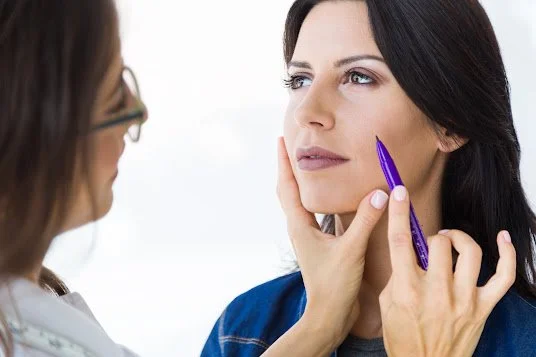
An Effective Facial Plastic Surgery Pre-Op Checklist
Planning before facial plastic surgery can make surgery day and early recovery feel calmer and less stressful. When you are preparing for facial plastic surgery in Austin, a simple pre-op checklist helps you stay organized and ask clear questions.
Before you choose procedures such as facelift, eyelid surgery, or rhinoplasty, your surgeon will review your health history and talk through your goals. This checklist is a general guide; your own instructions should always come from your surgeon based on your needs and the details of your surgery.
1. Clarify the Results You Want
Before your consultation, decide what you hope to change and what you want to preserve. Clear goals make it easier for your surgeon to explain options and recommend whether a particular facial plastic surgery plan matches your priorities and timeline.
You might jot down:
What “natural” results look like to you
One or two features you most want to improve
One or two changes you want to avoid
Dates for photos, travel, or events
2. Share a Complete Health Picture
Your care team can plan most safely when they have a full view of your health. Even details that feel minor can matter for anesthesia, bruising, or healing after surgery.
Be ready to talk about:
Current medications, vitamins, and supplements
Allergies and any past reactions to anesthesia or medications
Prior surgeries, scars, or healing issues
Smoking or vaping habits and alcohol use
3. Confirm Your Medication and Illness Plan
Do not guess about what to stop or when. Ask for a written plan that explains which medications or supplements to avoid before surgery and which are safe to use afterward. Mayo Clinic notes that some common pain relievers may be restricted because they can increase bleeding risk. Good questions to ask include:
Which medications or supplements should I pause, and when?
What can I use for pain or headaches before surgery?
What should I do if I develop a fever, cough, or cold sores?
4. Make a Realistic Plan for Smoking and Vaping
If you smoke or vape, tell your surgeon early. The World Health Organization has highlighted that smoking raises the risk of post-surgical complications, including delayed wound healing and breathing problems after anesthesia. If quitting feels challenging, ask about support instead of trying to stop on your own. Even a short period of stopping before surgery may help lower the risk and support better recovery.
5. Set Up a Comfortable Recovery Space at Home
A little preparation at home can make the first few days after facial plastic surgery easier. The goal is to reduce errands and decisions when you may feel tired or swollen.
Consider setting aside:
Extra pillows to keep your head comfortably elevated
Easy snacks, water, and any surgeon-approved supplies
Button-up or zip-front tops so nothing goes over your face
A phone charger near a quiet, comfortable rest spot
6. Arrange Support, Follow-Ups, and Next Steps
Plan for a trusted adult to drive you home and stay with you for at least the first 24 hours, or longer if your surgeon recommends it. If you expect to use prescription pain medication, confirm who will drive you to early follow-up visits.
If you would like a deeper look at what happens before surgery, you can read more about what to expect from a facial plastic surgery consultation.
Disclaimer: This article is for general educational purposes only and is not a substitute for advice from a board-certified facial plastic surgeon.

Why Board Certification Matters in Facial Plastic Surgery
Seeking facial plastic surgery or rhinoplasty is not just about aesthetic goals—it’s also a decision that directly affects safety, long-term function, and peace of mind. Having a surgeon who holds board certification in a relevant specialty can make the difference between a satisfactory outcome and significant complications.
What Board Certification Really Means
Board certification signifies that a surgeon has met rigorous standards in education, training, and ongoing practice within a specialized field. It’s not simply a license to operate. The American Society of Plastic Surgeons described certification as “a commitment to continued learning and professional standards.”Surgeons without such certification may perform procedures outside their training, increasing risks of poor results or complications.
Why Certification Matters for Facial Plastic Procedures
Facial surgeries such as rhinoplasty or neck lifts involve intricate anatomy—skin, bone, nerves, soft tissue—all in tight proximity. Surgeons with board certification are required to handle both aesthetic and reconstructive cases, making them better equipped for complexity and unexpected outcomes.
How to Verify Certification and Credentials
Before scheduling a procedure, confirm which board has certified the surgeon. Certifications from recognized boards matter. Independent verification is often possible online, and many accrediting bodies emphasize that board certification correlates with patient safety and lower complication rates. This is an important step, as it can provide insight into your chosen surgeon.
Questions to Ask at Your Consultation
Bringing a prepared set of questions to your consultation is one of the most effective ways to evaluate a surgeon’s training, technical approach, and commitment to patient care. A structured list helps you compare providers objectively and ensures nothing important is overlooked during the conversation. It also gives you clearer insight into how the surgeon explains procedures, discusses safety, and outlines postoperative expectations. Consider asking questions that reveal experience, philosophy, and how they handle outcomes over time.
Which specialty board certified you?
How many procedures of this type do you perform annually?
What are your hospital privileges?
How do you handle complications or revisions?
Balancing Aesthetics & Function for Your Best Outcome
A qualified surgeon will always integrate aesthetic goals with functional integrity, especially in facial procedures. Beyond contour and shape, aspects like breathing, structural support, healing, and long-term stability are essential. Certification often correlates with a surgeon’s ability to manage both beauty and biomechanics.
Bonus Tip
Review the surgeon’s published case studies or ask for patient outcomes with similar facial anatomy. This helps you understand how diverse experience influences results and demonstrates a surgeon’s transparency.
The credential of board certification is more than a title—it reflects enduring training, proven skill, and a commitment to safe, ethical practice. When choosing a surgeon for facial plastic procedures, this credential is one of your most reliable indicators of quality, patient safety, and outcome consistency. By prioritizing board-certified professionals and asking detailed questions, you empower yourself toward a confident decision and a more satisfying surgical experience.
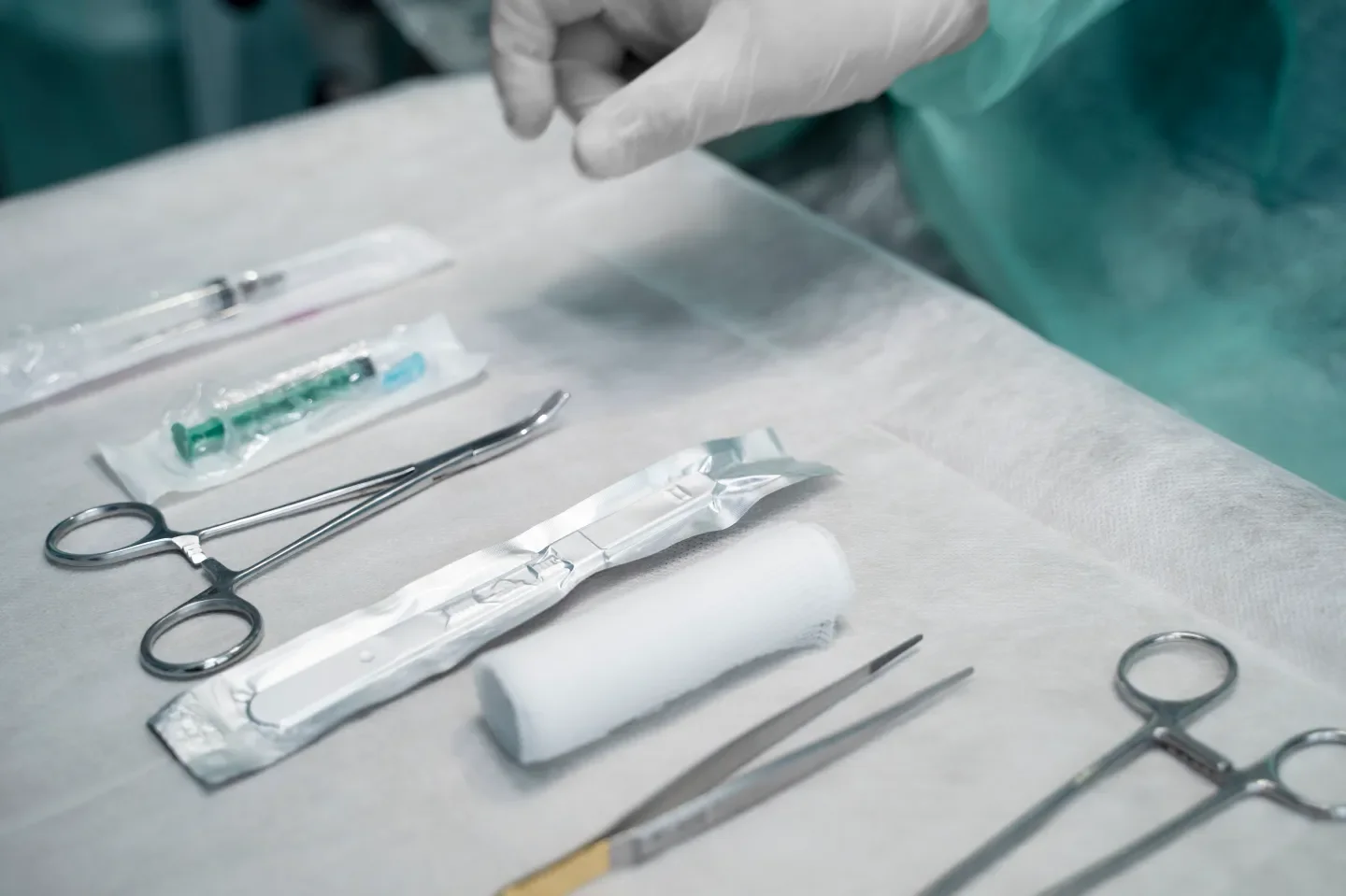
How to Choose a Surgeon for Rhinoplasty or Facial Plastic Surgery
Choosing a surgeon for rhinoplasty or facial plastic surgery requires thoughtful research and a structured evaluation process. These procedures affect not only appearance but long-term function and confidence, so understanding how to assess a surgeon’s training and approach is essential. A helpful starting point is reviewing core qualifications and comparing how different specialists communicate their treatment philosophy.
Confirm Board Certification and Relevant Experience
Board certification helps verify that a surgeon has advanced training in facial anatomy, aesthetics, and safe surgical practices. Certifications from reputable boards ensure extensive education, ongoing training, and adherence to strict ethical standards. Patients should also ask how many facial procedures the surgeon performs each year. Higher volumes often correlate with more refined technique and consistent outcomes.
Review Before-and-After Results Thoughtfully
Before-and-after galleries offer meaningful insight into a surgeon’s aesthetic style and ability to produce natural-looking results. When reviewing these images, compare facial structures similar to your own. This makes it easier to understand realistic expectations and how different approaches influence the balance of facial features. Look for results that appear symmetrical, refined, and appropriate for each individual’s anatomy.
Evaluate Safety Standards and Facility Accreditation
Safety is a top priority when undergoing any facial procedure. Accredited surgical facilities follow rigorous standards regarding equipment, anesthesia protocols, emergency preparedness, and staff training. According to the American Society of Plastic Surgeons, accredited centers maintain “clear benchmarks for patient safety, surgical quality, and facility reliability.” These checks ensure that every aspect of care meets established medical guidelines.
Prepare a Consultation Checklist
Consultations allow you to understand the surgeon’s method, communication style, and commitment to patient education. A surgeon who answers these questions thoroughly and transparently demonstrates a patient-centered philosophy. Come prepared with a list of questions to guide your discussion.
Questions to Ask:
How do you personalize procedures for different facial structures?
What is your surgical approach for maintaining natural function?
Can you explain expected healing times clearly?
What post-operative care and follow-up steps are included?
How do you manage revisions if adjustments are needed later?
Prioritize Both Aesthetic and Functional Outcomes
Rhinoplasty uniquely blends aesthetics with functional considerations such as airflow, nasal structure, and long-term stability. A qualified surgeon evaluates how changes in cartilage, soft tissue, and bone may impact breathing and overall harmony. This balance ensures results that look natural while maintaining or improving function. Discuss how the surgeon approaches structural integrity, scar placement, and long-term durability.
Quick FAQ
Q: How early should someone begin researching surgeons?
A: Many people begin months in advance to compare options thoroughly.
Q: Are virtual consultations useful?
A: Yes, for initial discussions, though final assessments typically require in-person evaluation.
Q: What role does imaging play in planning?
A: 3D imaging or morphing tools can help visualize possibilities but should not be viewed as guarantees.
Key Takeaways
Confirm board certification and procedural experience
Evaluate before-and-after results carefully
Ensure the facility meets accreditation standards
Bring a structured checklist to your consultation
Choose a surgeon who balances aesthetics and function
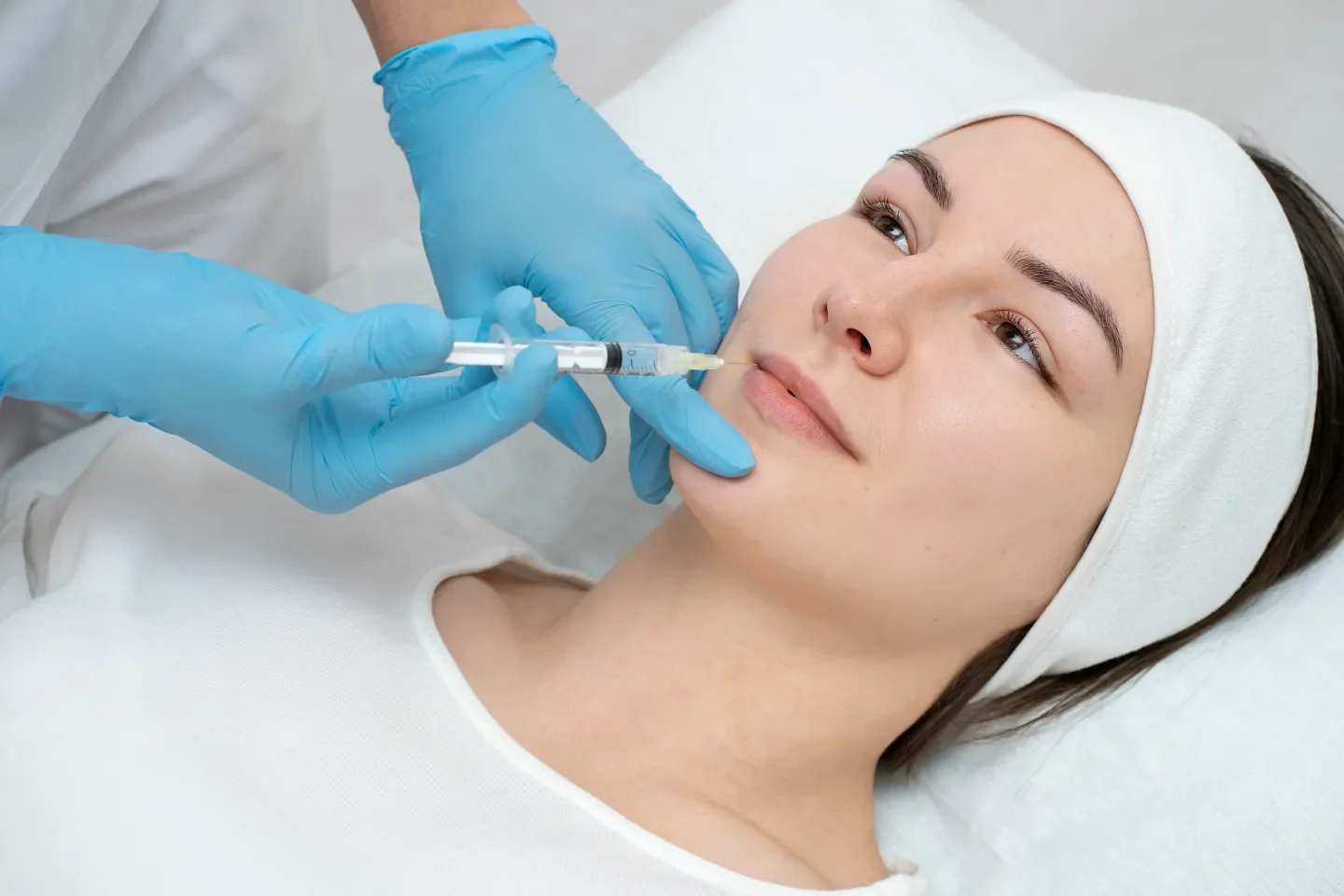
What Patients Need to Know About Surgical vs. Non-Surgical Options
Choosing between surgical and non-surgical cosmetic treatments is about alignment with your goals, anatomy, risk tolerance, and lifestyle. Below is a guide to help you understand key differences, benefits, limitations, and decision factors in a thoughtful, evidence-based way.
Defining the Options: Surgical vs. Non-Surgical
Surgical procedures involve incisions, anesthesia, tissue removal or repositioning, and a recovery period. Examples include facelifts, rhinoplasty, eyelid surgery, and neck lifts.
Non-surgical treatments are minimally invasive (or non-invasive), with no large incisions or general anesthesia. Common methods include Botox®, dermal fillers, laser resurfacing, chemical peels, ultrasound, and radiofrequency skin tightening.
Longevity, Down Time, & Magnitude of Change
Although both surgical and non-surgical treatments aim to enhance facial aesthetics, they do so through very different means. Understanding how each option performs in terms of duration, recovery, risk, and overall transformation can help patients make informed, realistic choices. The chart below summarizes the core distinctions at a glance:
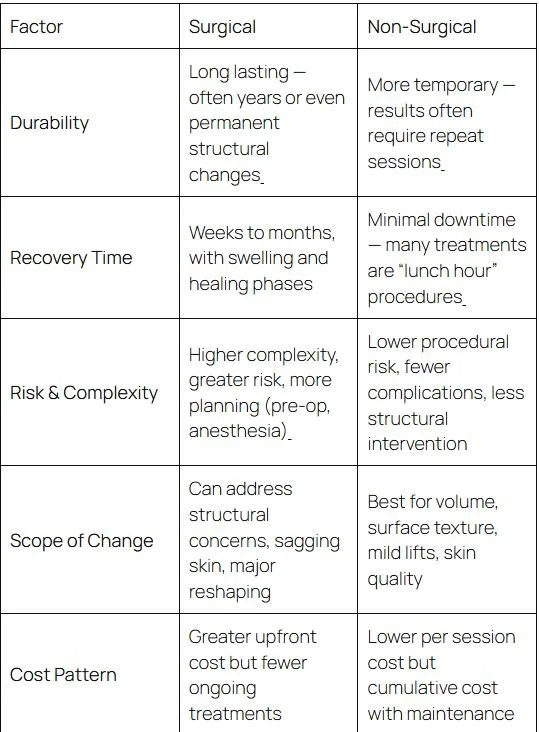
When to Choose Surgical or Non-Surgical Options
Surgical approaches often excel when structural changes are required, such as repositioning fat, tightening loose skin, or reshaping bone or cartilage. These are scenarios where non-invasive treatments simply lack the mechanical leverage.
Non-surgical methods shine when your goals involve surface smoothing, volume restoration, fine lines, or skin tone improvement — and when downtime must be minimal.
The Role of Combination & Staged Plans
In many cases, the best approach is hybrid or staged care. You might start with non-surgical treatments to “test the waters” or maintain results, followed later by surgical enhancement if a more dramatic change is desired. This also allows you to space investment over time, see how tissues respond, and adjust plans accordingly.
What to Ask When Evaluating a Provider
What is your complication rate for this procedure?
How often do you perform the exact procedure I’m considering?
Can I see before/after results and long-term follow-ups for your patients?
How do you manage patient expectations and revise plans if outcomes vary?
What is the realistic duration of this option for my unique anatomy?
Final Takeaway
Surgical and non-surgical pathways each have strengths and limits. The right choice depends on the magnitude of change you seek, your tolerance for downtime and risk, and your long-term vision. When considered judiciously, both strategies can be complementary.
Disclaimer: This content is for educational purposes only and does not constitute medical advice.
How Long Do Results from Botox® and Fillers Really Last?
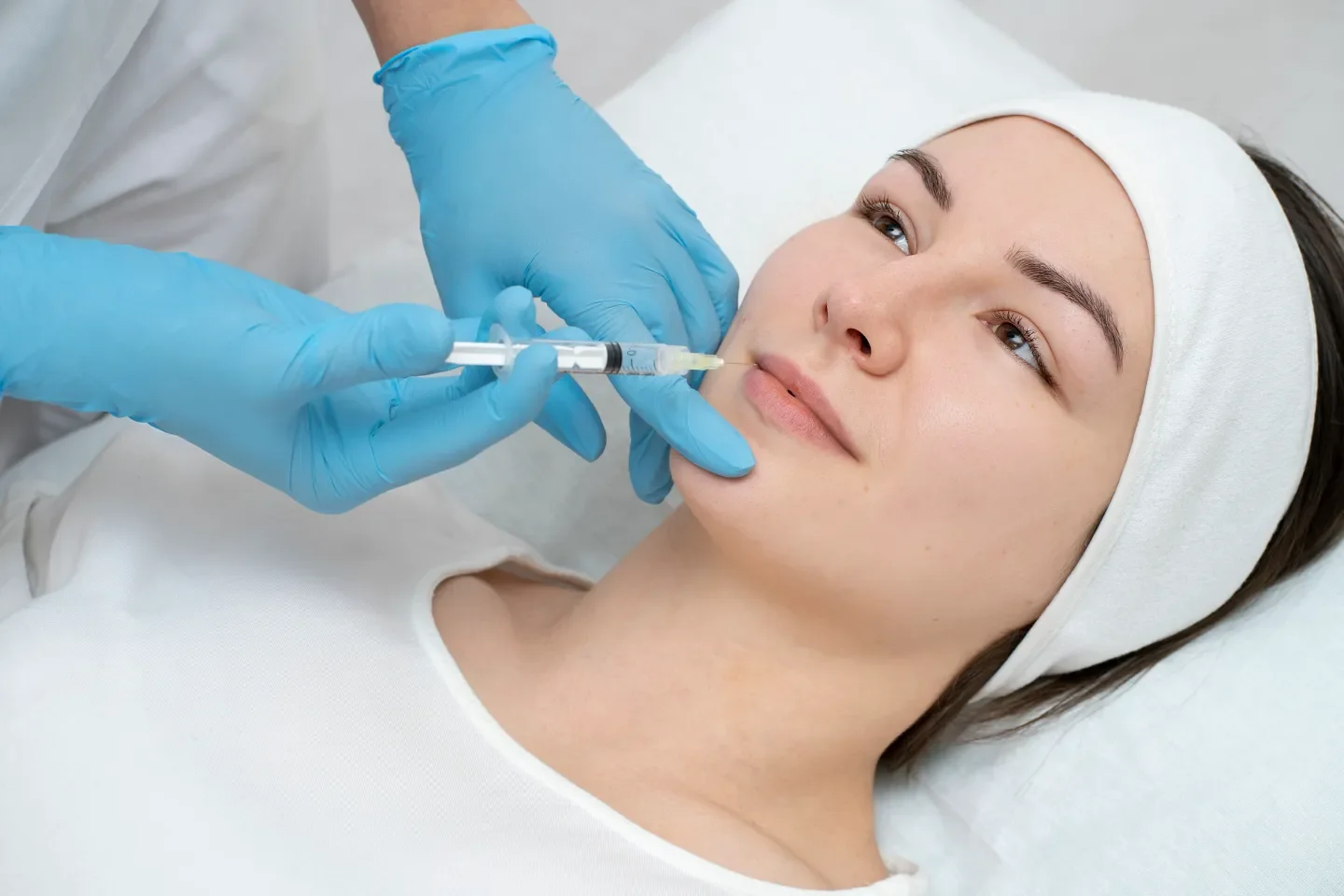
When people ask, “How long will my Botox or filler last?” The honest response is: it depends. Multiple factors, from the type of injection to your own metabolism, shape how durable the effects will be. Below is a breakdown of what the evidence and clinical practice suggest, plus what you can expect at our boutique practice.
Are Fillers The Right Choice?
For some people, the underlying issue goes beyond what non-surgical techniques can correct. For example, Botox is entirely inappropriate when rhinoplasty is the optimum treatment. During our initial consultation, we will discuss your goals and the procedures that would work best for you.
Botox®: Typical Duration and Influencing Factors
Botox, a neuromodulator, works by relaxing targeted muscles to soften expression lines. As you will discover on our website, “results typically last about 3 months” for facial wrinkle reduction., although for some patients it may last up to 5 months or more, depending on dosage, injection precision, and muscle activity in the treated area.
Key factors:
Dose & technique: More precise placement and adequate dosing can prolong results.
Muscle usage: Areas with more dynamic movement (like around the mouth) tend to wear off faster.
Patient metabolism: Faster metabolic rates may break down Botox more quickly.
Repeated treatments: Over time, the muscles may atrophy slightly, possibly lengthening the duration.
Fillers: Variable Longevity by Type
Unlike Botox, dermal fillers restore volume rather than relax muscle movement. Their duration depends heavily on the material used and where it’s placed.
Hyaluronic acid fillers (e.g., Juvederm, Restylane) often last 6 to 18 months, depending on the area and product formulation.
More robust fillers like calcium hydroxyapatite and poly-L-lactic acid may last 12 months or longer, depending on how stimulating they are to collagen production.
Some thicker or specialized fillers placed in deeper or less mobile regions can persist beyond 18 months under optimal conditions.
It’s also worth noting that swelling, minor bruising, or massaging effects can mask or distort visible outcomes in the short term, so the “true settled result” often appears days to weeks later.
How We Approach Duration in Our Practice
Patients often ask about durability, and we always emphasize that these are estimates, not guarantees. In our practice:
We customize the product choice and volume based on face anatomy and goals.
We monitor facial movement and symmetry to ensure balanced placement and avoid overcorrection.
We schedule follow-up assessments so we can track when slight fading begins and plan responsibly.
We never promise permanence; injectables are tools, not permanent structural changes.
Tips to Maximize Results
While longevity isn’t fully in your control, you can take steps to preserve results:
Maintain a stable schedule, avoiding lengthy gaps between treatments.
Use sunscreen and avoid excessive sun exposure.
Stay hydrated and follow a consistent skincare regimen.
Avoid manipulating or massaging the treated area during early settling.
See a qualified injector who understands anatomy and injects conservatively.
Wrapping Up
Botox typically lasts around 3 months, while fillers may last from 6 months to over a year, depending on type and placement. But duration isn’t the only consideration because your comfort, safety, natural appearance, and personalized strategy matter most. In our boutique approach, we prioritize technique, harmony, and realistic expectations over marketing claims or promises of “magic permanence.”
Disclaimer: This content is for educational purposes only and does not constitute medical advice.